
OPEN LAKEHOUSE DATABASE
OSDBstore
Your Postgres, now a Data and AI platform.
OSDBstore runs transactions, lakehouse analytics, machine learning, retrieval and agents on one PostgreSQL cluster and one SQL surface. No pipelines between five systems.
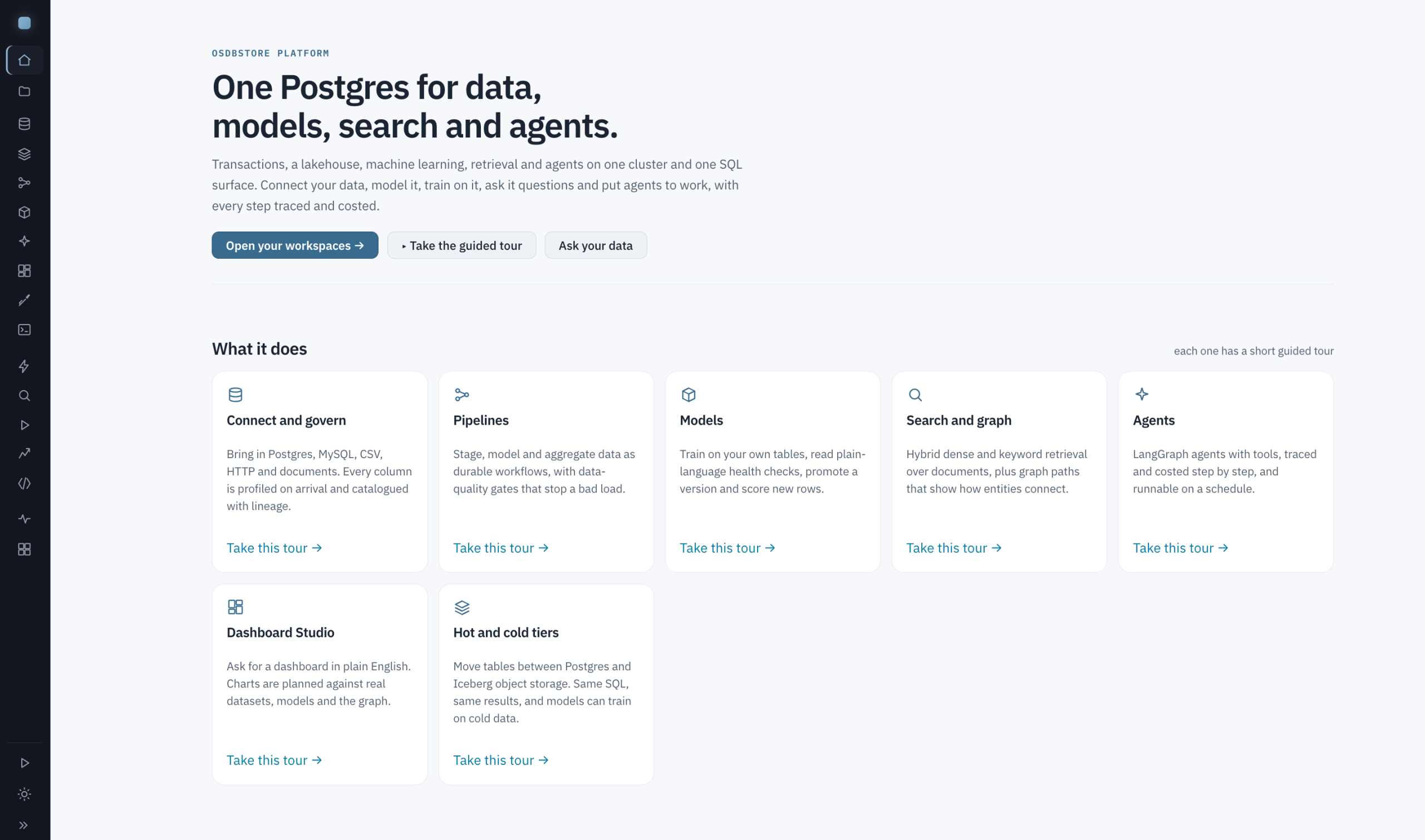
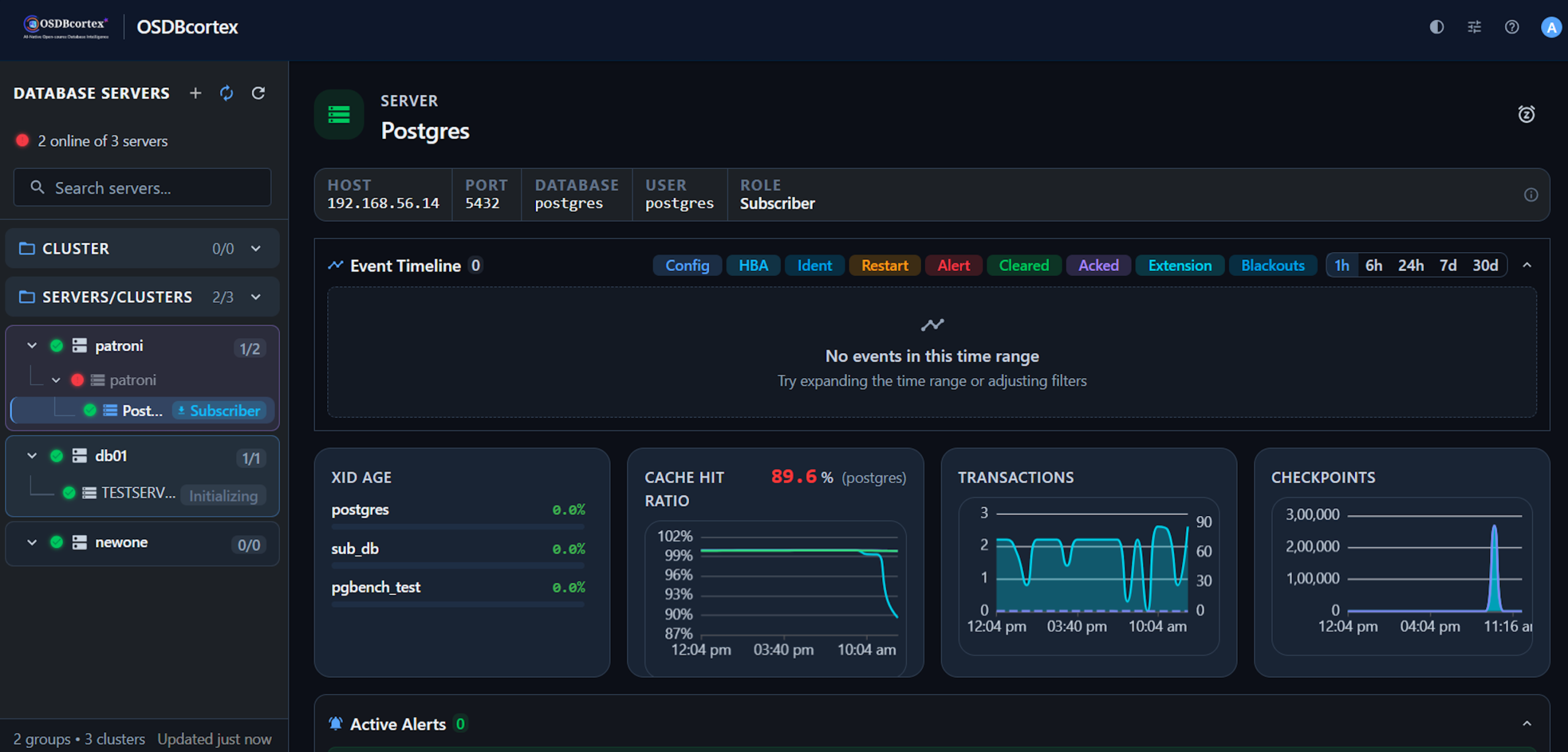
OpenSource DB gives you AI to run Postgres, AI on top of your Postgres data, and AI to keep Postgres storage lean, all on standard open-source PostgreSQL, with no lock-in and data staying on-prem
ONE PLATFORM
Five workloads. One cluster. One SQL surface.
Most teams stitch a transactional database, a warehouse, an ML platform, a vector store and an agent framework together. OSDBstore puts them behind the same connection string.
Transactions
Plain PostgreSQL underneath. Your applications keep their drivers, SQL and extensions.
Lakehouse analytics
Aging rows tier to Apache Iceberg on object storage. One query reads hot and cold together.
Machine learning
Train, register, promote and score models from SQL, with drift-gated retraining.
Retrieval and generation
Hybrid dense and keyword search over your documents, straight from SQL.
Agents
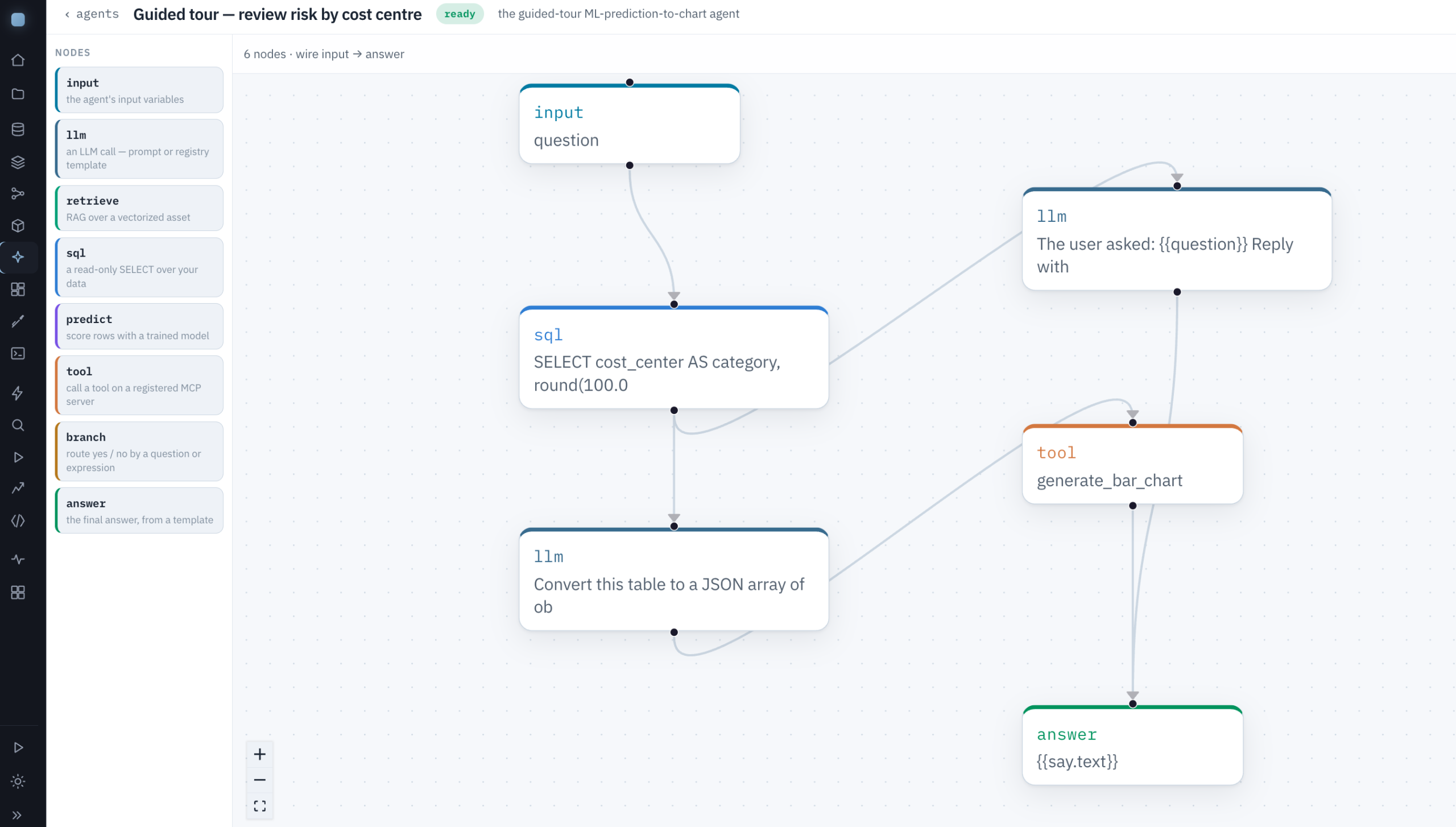
LangGraph agents checkpointed in Postgres, every step traced and costed.
A workbench to run it
Connect, profile, model and ask in one console. No glue code.
HOT AND COLD, ONE TABLE
Keep recent rows in Hot Tier.
Park the rest on object storage but still retain speed.
OSDBstore moves aging rows into Apache Iceberg files on any S3-compatible store while the table stays a single table. Your queries, models and dashboards do not change.
- Move a table cold, and back, without rewriting a query
- Identical results on both sides of the flip
- Train models and build indexes on cold data
Intelligence Over the Data
One question, answered by three engines.
comprehensive insight comes from the model, the graph and the documents.
- The model flags vendors from amounts, purchase orders and approvals
- The graph shows each one linked to an employee through a shared bank account
- Audit notes name the same vendors, with sources
FOR DEVELOPERS
Everything is a function call.
Train a model, search your documents and run an agent with the same client you already use for your tables. No new SDK, no second service to authenticate against.
-- train a model on a table you own
SELECT status, metrics
FROM openpgray.train('invoice_review_clf',
  'SELECT amount, po_ratio, has_po, label FROM core.ap_invoices',
  '{}', 'LogisticRegression');

-- score new rows
SELECT row_id, prediction, probability
FROM openpgray.predict('invoice_review_clf',
  'SELECT amount, po_ratio, has_po FROM core.ap_invoices_new ORDER BY id');

-- search by meaning: dense + BM25, RRF-fused
SELECT title, chunk, rrf_score
FROM llm.search('Which vendors share a bank account?', 5);

-- run an agent and read its trace
SELECT agent.submit('answer',
  jsonb_build_object('question', 'Which vendors share a bank account?'), NULL) AS run_id;
GET STARTED
The whole stack, in one command.
The engine, object storage, the ML and agent daemons, the retrieval server and the console start together from a installation script.
./deploy/install-engine.sh


open http://localhost:8080